CIP and changeover discipline for tropical juice plants
Tropical fruit juice production is not a single-product operation. A typical plant may move from mango nectar to guava base, passionfruit concentrate, pineapple juice and mixed fruit formulations within the same production week. Each fruit brings a different soil load, viscosity profile, fiber behavior, acidity, aroma carryover and clarification challenge.
For plant managers, the question is not only whether the line can be cleaned. The question is whether the line can be cleaned predictably without losing the next production window.
Enzymeforjuice supports tropical juice processors with enzyme systems designed for production realities: lower mash viscosity, faster press release, improved clarification speed, reduced filtration load and more stable batch-to-batch processing. As an enzyme supplier for fruit juice processing, we look at enzyme use together with changeover, CIP and contamination control — because the best yield gain is only useful when the line can keep running.
Why tropical fruit changeovers are harder than they look
Mango, guava and passionfruit do not behave like clear apple juice. They carry high pectin loads, suspended pulp, seed fragments, starch-like haze contributors and fibrous insoluble material. Pineapple adds its own complexity with strong acidity, active endogenous enzymes and aroma persistence.
Common changeover pain points include:
- Thick mash holding in elbows, dead legs and heat exchanger surfaces
- Pectin-rich films that resist simple water push-out
- Filter blinding after incomplete upstream treatment
- Clarifier variability when residual pulp enters the next batch
- Aroma or color carryover between high-impact fruits
- Extended recirculation time before operators are confident to restart
- Rework or dilution decisions caused by inconsistent first-run material
In short: tropical plants do not only clean sugar. They clean structure.
Start with a risk-based changeover matrix
A good tropical juice changeover plan should rank recipes by more than flavor. Build a matrix that combines:
1. Soil load
High-pulp mango and guava should be treated as heavy-soil products. They leave more fiber, pectin film and suspended solids than clarified pineapple or passionfruit streams.
2. Viscosity
Viscous products require stronger push-out discipline and more attention to low-flow zones. Enzyme-treated mash may drain faster, but untreated residues can still hold in valves, screens and transfer lines.
3. Color and aroma intensity
Passionfruit and guava can leave detectable sensory carryover even when visible solids are removed. Changeovers into lighter or more neutral formulations should be sequenced carefully.
4. Label and allergen sensitivity
If the plant also handles coconut, dairy-containing blends, nut extracts, fortified mixes or customer-specific functional ingredients, those recipes require documented segregation and validated cleaning steps. Even when the core line is fruit-only, label-sensitive carryover must be controlled.
5. Enzyme application point
Enzymes added in mash tanks, holding tubes or pre-press stages change the physical behavior of the material. The cleaning plan should reflect where viscosity reduction occurred and where untreated pulp may remain.
Where enzymes help the changeover window
The primary purpose of fruit processing enzymes is not cleaning. Their job is to modify the fruit matrix so the process runs better. But that process improvement can also support cleaner downstream behavior.
Well-selected pectinase, cellulase and hemicellulase systems can help plants achieve:
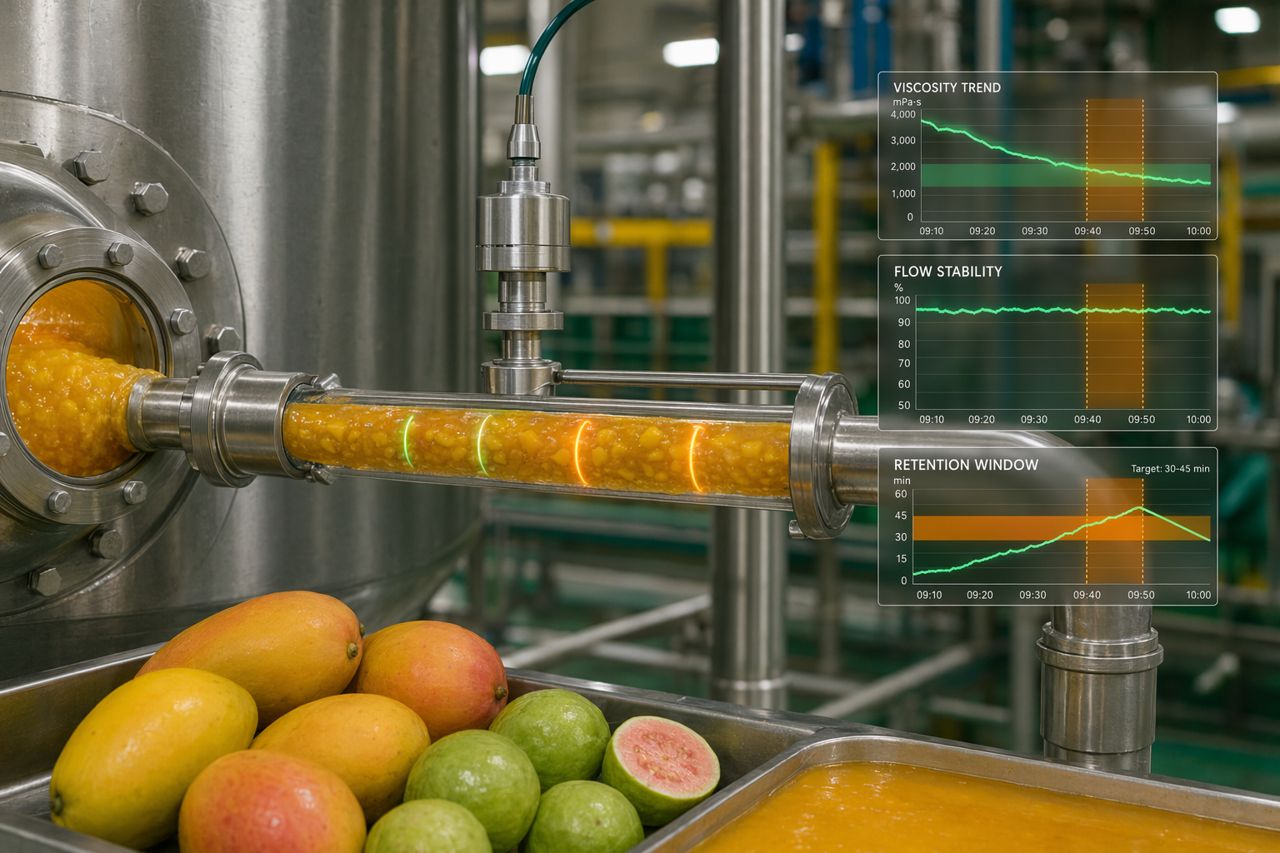
- Faster viscosity drop in mango and guava mash
- Better juice release at press or decanter stage
- Lower suspended solids entering clarification
- Reduced load on filters and membranes
- More consistent retention behavior across batches
- Less operator intervention during high-pulp campaigns
When mash breaks more predictably, less dense pulp travels forward as a heavy residue. That can reduce the amount of stubborn material that reaches downstream equipment — provided dosing, mixing and temperature windows are controlled.
Enzyme-aware CIP: what to check before the caustic cycle
Before CIP starts, operators should know whether the previous product was fully enzyme-treated, partially treated or untreated. That matters because the line may contain different material behaviors in different zones.
Pre-rinse is not a formality
A high-velocity pre-rinse removes bulk fruit solids before chemistry is introduced. If operators rush this step, caustic can contact heavy organic soil too early, producing long foam events, blocked strainers and inconsistent cleaning return.
Pre-rinse should be observed for:
- Pulp fragments in return flow
- Color intensity drop-off
- Foam behavior
- Flow stability through strainers and return lines
- Temperature recovery at the skid
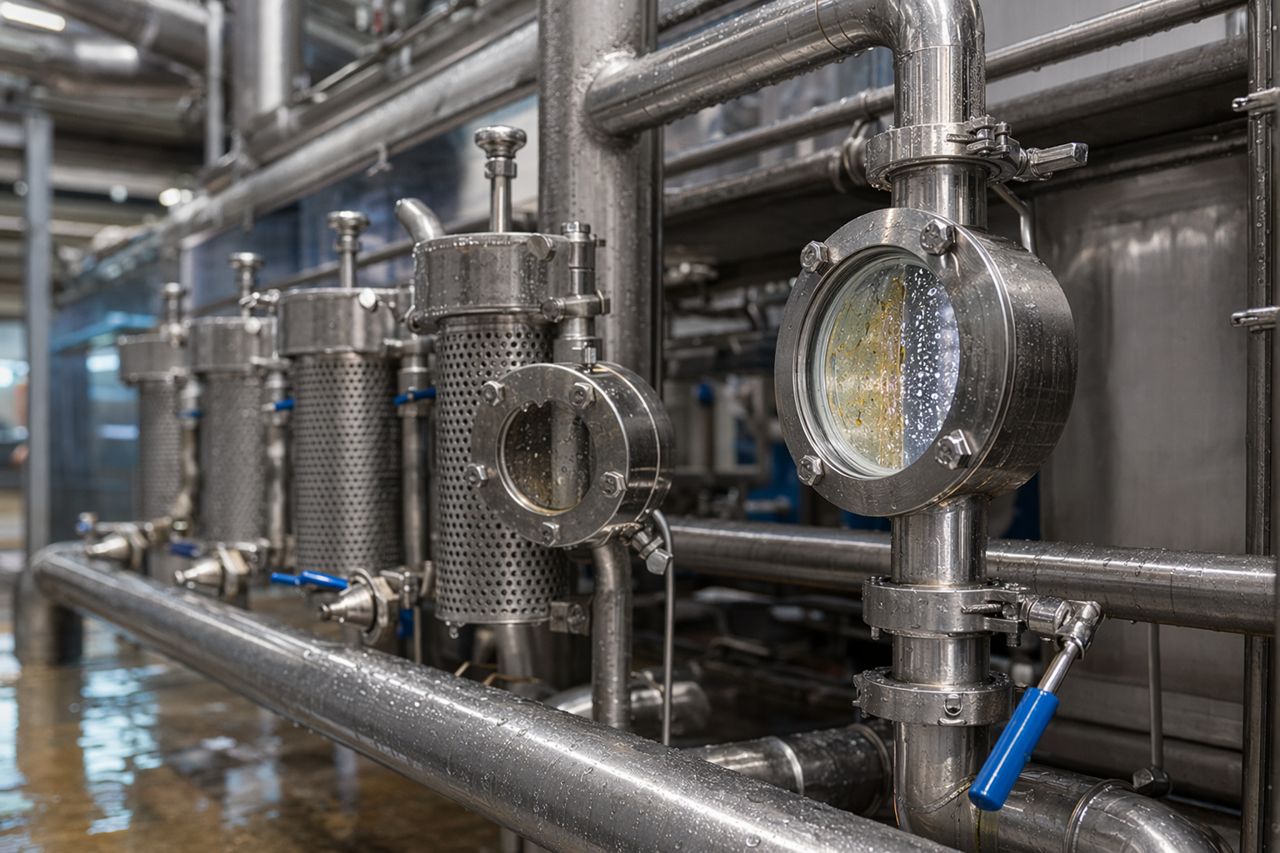
Screens and strainers need changeover ownership
Tropical fruit residues often collect in places that do not appear on a simplified process diagram. Assign clear responsibility for inspection and reset of:
- Rotary screens
- Basket strainers
- Inline filters
- Decanter feed zones
- Press cloths or belts
- Valve clusters near pulp transfer
- Sampling ports and bypass loops
A clean tank is not enough if the first liters of the next batch pull residue from a neglected screen housing.
Heat exchangers deserve special attention
Pectin-rich and fiber-rich deposits can build where temperature, flow and product viscosity intersect. If a plant sees unexplained first-batch haze or slow heat transfer after mango or guava campaigns, review heat exchanger cleaning verification before changing the juice formulation.
Allergen and label carryover in fruit plants
Many tropical juice facilities are not purely fruit operations. The same plant may run coconut blends, dairy-containing smoothies, nut-flavored bases, protein-enriched drinks, botanical extracts or customer-specific premixes. These create different control requirements than a standard mango-to-pineapple changeover.
For allergen or label-sensitive runs, changeover should include:
- Dedicated sequencing rules from lower-risk to higher-risk products where possible
- Physical removal of residues before chemical cleaning
- Documented inspection points after CIP
- Controlled release of the next batch based on plant policy
- Segregated handling of enzyme preparations and processing aids
- Operator training on formulation-specific carryover risks
Enzyme preparations should be handled as industrial processing inputs with appropriate storage, closed handling where practical and dust or aerosol control according to the site safety program.
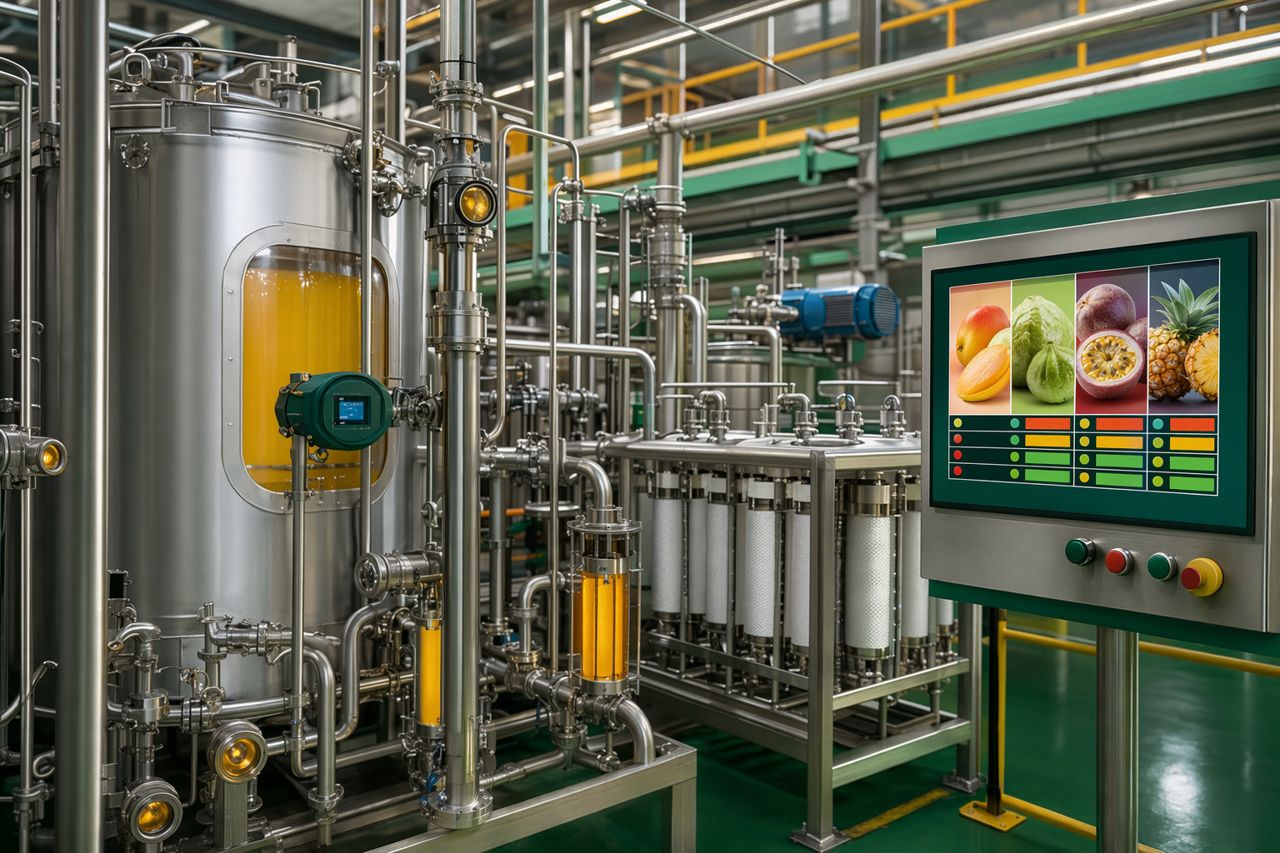
Practical sequencing for mango, guava, passionfruit and pineapple
There is no universal sequence, but many plants gain stability by avoiding abrupt transitions from heavy pulp to light clarified juice.
A practical sequence may look like:
- Run lighter clarified products before heavy-pulp nectars where customer schedules allow.
- Group mango and guava campaigns to limit repeated heavy-soil cleanups.
- Use passionfruit changeovers with attention to aroma carryover and seed fragment control.
- Run pineapple with attention to acidity, proteinaceous residues and formulation compatibility.
- Reserve extended verification for shifts into allergen-bearing, label-sensitive or premium clear products.
The goal is not to make scheduling rigid. The goal is to stop the schedule from hiding cleaning risk.
Enzyme selection affects downstream cleaning pressure
An enzyme program should be evaluated by production outcomes, not only by lab performance. For tropical fruit plants, the useful questions are operational:
- Does the mash pump more consistently?
- Does the press load release faster?
- Does clarification reach target condition sooner?
- Does the filter cycle run longer before intervention?
- Does the first batch after changeover meet visual and analytical expectations?
- Does the line return to production with less waiting and fewer manual resets?
Enzymeforjuice formulates enzyme solutions around fruit type, process temperature, holding time, equipment layout and target juice style. A mango nectar line and a clarified passionfruit line do not need the same treatment strategy.
Downtime reduction comes from verification, not guesswork
CIP records should help operators make faster decisions. Useful records include:
- Product-to-product changeover category
- Previous fruit and next fruit
- Heavy-soil or light-soil classification
- Enzyme application point and process hold window
- Pre-rinse observations
- Filter, strainer and screen status
- CIP start and release time
- First-batch turbidity, color or visual notes according to plant practice
- Any manual intervention required
When this data is connected to enzyme performance, plants can identify which recipes create avoidable downtime and where formulation or process adjustments will pay back fastest.
When to review your enzyme program
A tropical juice plant should review its enzyme program when any of these appear:
- Mango or guava mash remains difficult to pump
- Press yield varies between fruit lots
- Clarification time changes without a clear equipment cause
- Filter loading increases after high-pulp campaigns
- CIP time expands during peak season
- Changeovers require repeated manual cleaning
- First-run material after CIP is downgraded or held
- Mixed fruit formulations show inconsistent texture or haze
These are not just quality issues. They are throughput issues.
How Enzymeforjuice supports tropical juice processors
Enzymeforjuice works with production teams to match enzyme systems to fruit matrix, plant layout and commercial targets. We focus on practical outcomes: better flow, stronger yield, faster clarification, lower filtration load and more reliable changeover performance.
For a plant alternating mango, guava, passionfruit, pineapple and mixed fruit formulations, the right enzyme program should support the production schedule rather than complicate it.
Request a quote
Planning a new tropical juice line, troubleshooting high-pulp changeovers or comparing enzyme options for mango, guava, passionfruit or pineapple?
Use the on-site request a quote form to share your fruit types, process flow, target juice style and current bottleneck. Enzymeforjuice will respond with a practical enzyme recommendation for validation in your plant.