Tropical Fruit Purée Enzyme Dosing Guide
Enzymeforjuice is an enzyme supplier for fruit juice processing teams that need practical dosing decisions tied to plant output, not generic lab language. This guide is built for tropical fruit juice plants working with mango, guava, passionfruit, pineapple, papaya, mixed tropical blends, and high-solids purées where pulp behavior can change quickly from load to load.
The goal is simple: reduce mash viscosity, improve juice release, shorten clarification time, lower filtration burden, and keep batches predictable without exposing confidential process data.
Request a quote for a plant-specific enzyme recommendation.
Where Enzyme Dosing Creates Value in Tropical Fruit Processing
Tropical fruit purées can arrive with high pulp solids, variable pectin structure, fibrous cell wall material, starch carryover, and natural haze-forming components. If the enzyme package is under-matched, the plant sees slow tank turnover, uneven press performance, high retentate, overloaded filters, or inconsistent turbidity after clarification.
A well-selected enzyme system helps the plant target:
- Lower mash viscosity before pressing or decanting
- Higher free-run and press yield from the same fruit input
- Faster separation in clarification or settling steps
- Reduced load on centrifuges, membranes, filter sheets, and polishing filters
- More consistent Brix, turbidity, and flow behavior across batches
- Less downtime caused by blocked lines, fouled filters, or difficult cleanouts
The Five Inputs That Should Shape Dosing Strategy
1. Fruit Type and Ripeness Profile
Mango, guava, and passionfruit do not behave the same in process. Even within one fruit type, ripeness, cultivar, season, and pulp handling can change the enzyme demand. A ripe mango mash may need strong viscosity reduction, while guava may need more focus on cell wall breakdown and clarification support.
Enzymeforjuice reviews the fruit matrix first so the enzyme choice fits the process rather than forcing the process to fit the enzyme.
2. Pulp Solids and Mash Viscosity
High-solids purées typically require a more deliberate dosing plan than clarified juice. The key question is not only how much enzyme is used, but where it is introduced and how well it contacts the mash. Poor mixing can make a technically correct dose behave like an underdose.
Operational checks should include:
- Pumpability before and after enzyme contact
- Agitator coverage in holding tanks
- Dead zones in dosing or retention sections
- Pressure changes through transfer lines
- Press cake wetness and retained juice
3. Temperature Window
Enzyme performance depends on process temperature. Tropical fruit plants often balance enzyme efficiency against flavor protection, microbial control, heat history, and downstream pasteurization schedules.
The practical target is a temperature window that gives the enzyme enough activity in the available residence time while still fitting the plant’s thermal plan. Enzymeforjuice supports this discussion during trial design so the production team can avoid unnecessary holding or rework.
4. Residence Time and Contact Quality
A short residence time can work if mixing is strong and the enzyme package is suited to rapid viscosity reduction. A longer residence time may be useful when the plant needs deeper depectinization or improved clarification stability before filtration.
Residence time should be evaluated together with:
- Tank utilization and bottleneck position
- Press schedule or decanter feed rate
- Clarifier capacity
- Membrane or filter run length
- Required turbidity range before final polishing
5. Downstream Clarification Goal
Not every tropical juice line is aiming for the same endpoint. Nectar bases, cloudy juice, clarified juice, concentrates, and blend bases may each need a different enzyme approach.
Before recommending a product, Enzymeforjuice aligns the enzyme plan with the plant’s downstream goal: more flow through the press, cleaner separation, lower haze risk, longer filtration cycles, or tighter batch-to-batch consistency.
Fruit-Specific Processing Priorities
Mango Purée
Mango is often viscosity-driven. Enzyme treatment is typically used to improve pumpability, press behavior, decanter performance, and heat exchanger stability. A suitable package can reduce thick mash behavior and help the line move more predictably at production scale.
Guava Purée
Guava can bring high pulp load and fine suspended solids. The dosing plan should consider cell wall breakdown, clarification response, and filterability. The wrong approach can release solids without improving separation, so validation under plant conditions matters.
Passionfruit
Passionfruit may require a balanced treatment that supports juice release while protecting the desired character of the product. Seeds, pulp fraction, and extraction method influence where dosing should be applied.
Pineapple
Pineapple processes often focus on yield, haze control, and stable flow into downstream clarification. Treatment choice should account for natural enzymes, pulp content, and the plant’s heat treatment sequence.
Papaya and Mixed Tropical Blends
Papaya and tropical blends can shift quickly in viscosity and separation behavior. Mixed-fruit systems benefit from a dosing strategy built around the most difficult component, not the easiest one.
How to Build a Non-Confidential Plant Trial
A useful enzyme trial does not need to expose proprietary formulas, customer names, or commercial volumes. Enzymeforjuice can work from non-confidential operating bands and representative process samples.
A practical trial structure includes:
- Define the process objective: yield, viscosity reduction, clarification speed, filtration run length, or batch consistency.
- Select a representative fruit stream: same fruit type, solids profile, and heat history as normal production.
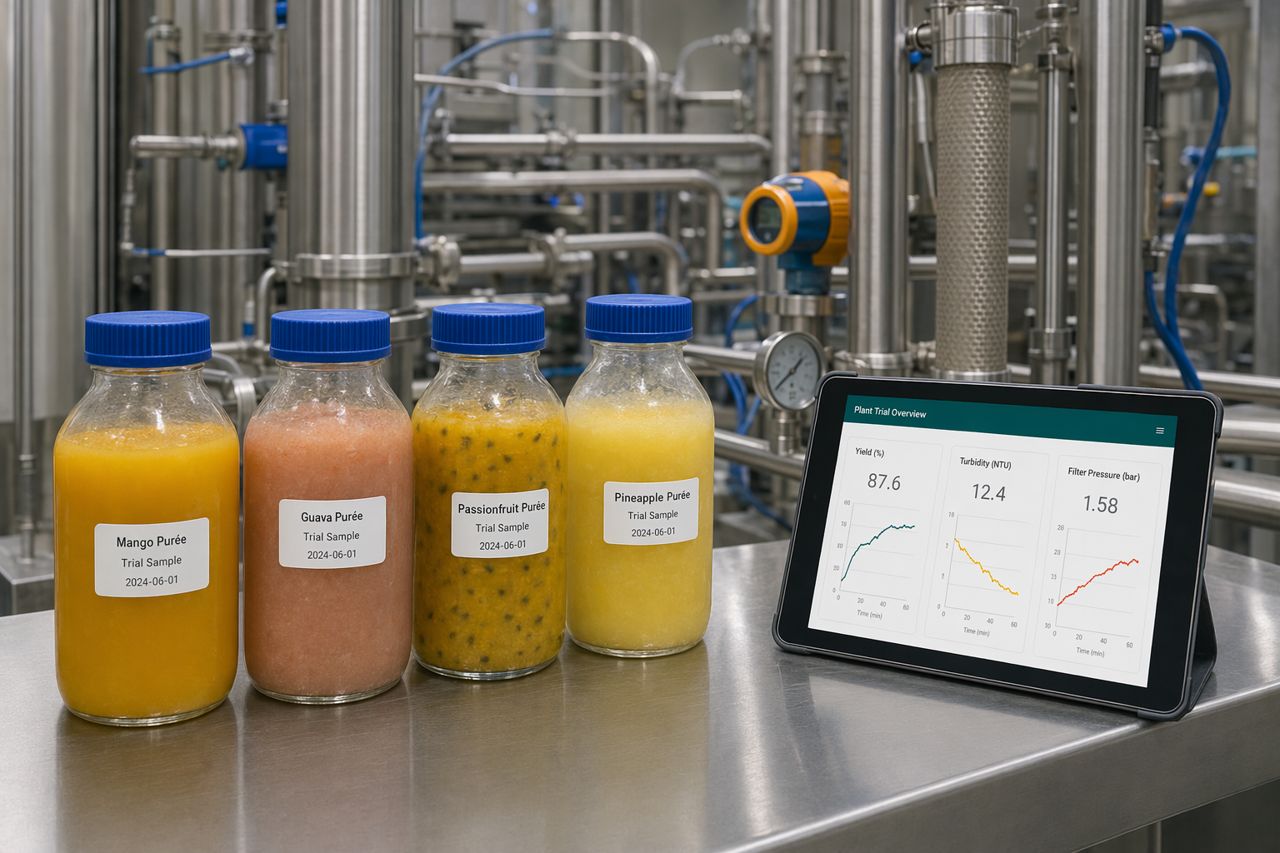
- Compare untreated control against staged enzyme conditions: low, medium, and higher treatment levels based on Enzymeforjuice guidance.
- Track plant-relevant outcomes: mash flow, press yield, turbidity trend, settling rate, filter pressure rise, filtrate clarity, and process time.
- Confirm the best operating window during a production-scale validation run.
The winning condition is not always the strongest treatment. It is the treatment that gives the best operational result at the right cost-in-use, with stable performance through normal fruit variation.
Choosing the Right Enzyme Package
A tropical fruit juice plant may need one enzyme function or a blended system depending on the fruit matrix and target endpoint.
Common functional needs include:
- Pectin breakdown to reduce viscosity and improve clarification
- Cell wall support to improve juice release from pulp
- Hemicellulose support for fibrous tropical fruit structures
- Starch management where starch carryover affects haze or flow
- Clarification support to reduce downstream separation load
Enzymeforjuice helps match the enzyme package to the process step, not just the ingredient list. The recommendation considers dosing point, mixing energy, hold time, temperature window, fruit variability, and downstream filtration design.
Dosing Point Options in the Plant
Before Mash Holding
Useful when the plant needs viscosity reduction before pumping, heating, pressing, or decanting. This point requires strong mixing and enough contact time before separation.
In a Retention Section
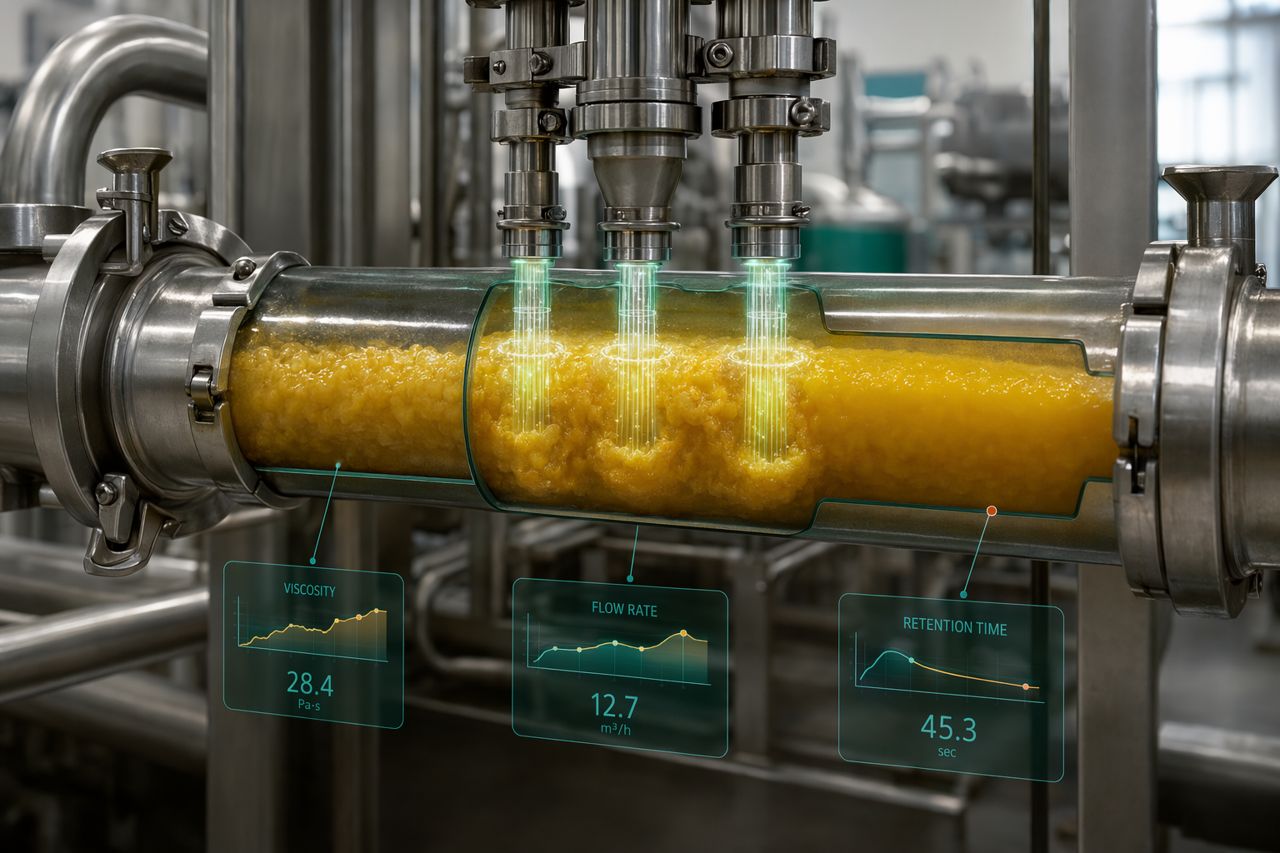
A controlled retention section can make enzyme treatment more consistent, especially where fruit feed changes throughout the shift. It also gives operators a defined checkpoint before clarification.
Before Clarification
This option suits plants that already have acceptable extraction but need faster settling, lower turbidity, or improved filter run length.
Before Membrane or Fine Filtration
Enzyme use ahead of fine filtration must be carefully validated. The aim is to reduce fouling and improve run length without creating new solids behavior that burdens the membrane or polishing step.
What Plant Managers Should Measure During Validation
Keep the trial focused on numbers that matter to production:
- Throughput at the press, decanter, centrifuge, or filter
- Mash viscosity trend and pump load
- Juice yield against fruit input
- Turbidity reduction over time
- Filter pressure rise and run length
- Volume lost in cake, sludge, or retentate
- Tank occupancy and total batch time
- Clean-in-place frequency linked to fouling
- Operator adjustments required during the run
These measurements make enzyme selection easier to defend across production, quality, purchasing, and maintenance teams.
Why Work With Enzymeforjuice
Enzymeforjuice supplies enzyme solutions for tropical fruit juice processing with a production-led approach. We help plants translate fruit variability into an enzyme dosing plan that can be tested, validated, and scaled without unnecessary complexity.
You get:
- Process-first enzyme selection for tropical fruit purées and juices
- Guidance for non-confidential trials and scale-up checks
- Support for viscosity, yield, clarification, and filtration objectives
- Clear documentation for purchasing and production review
- Practical recommendations built around existing plant equipment
Request a Quote
If your plant is evaluating enzyme treatment for mango, guava, passionfruit, pineapple, papaya, or tropical blends, send us your non-confidential process details through the on-site quote form.
Include the fruit type, target process step, solids or pulp description, current bottleneck, temperature window, available residence time, and the outcome you want to improve.
Request a quote and Enzymeforjuice will respond with a fit-for-process enzyme recommendation for validation.