Mango Season Throughput Planning for Juice Plants
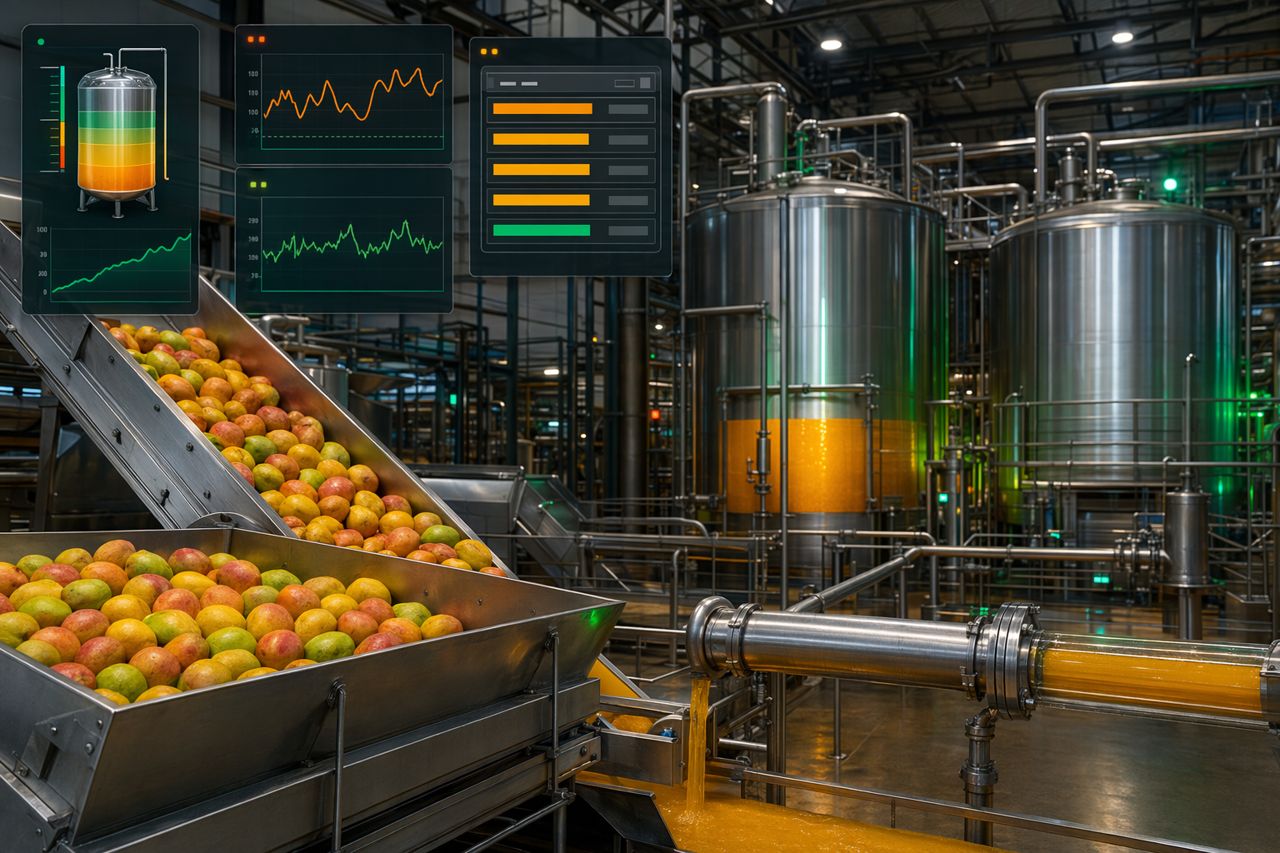
Mango season rewards plants that plan around pulp behavior, not just fruit volume. Intake can rise faster than extraction, holding tanks can become viscosity buffers, and a press or decanter that ran comfortably in the shoulder season can become the limiting asset by mid-peak.
For a tropical fruit juice plant, throughput planning should connect four realities: fruit arrival pattern, mash viscosity, available separation capacity, and cleaning windows. Enzyme-assisted viscosity management gives plant managers one more lever: it can help stabilize mash flow, reduce press load, improve juice release, and keep clarification moving when mango maturity shifts across lots.
Enzymeforjuice works as an enzyme supplier for fruit juice processing with a production-led focus: plant trials, dosing practicality, batch consistency, and cleaner movement through the line.
Start with the intake curve, not the nameplate capacity
During mango season, the constraint is rarely a single machine on paper. The constraint moves.
A typical peak-period pattern may look like this:
- Morning fruit arrival exceeds immediate washing, peeling, pulping, or destoning capacity.
- Pulpers run hard, then downstream separation becomes the choke point.
- Mash tanks fill faster than they empty.
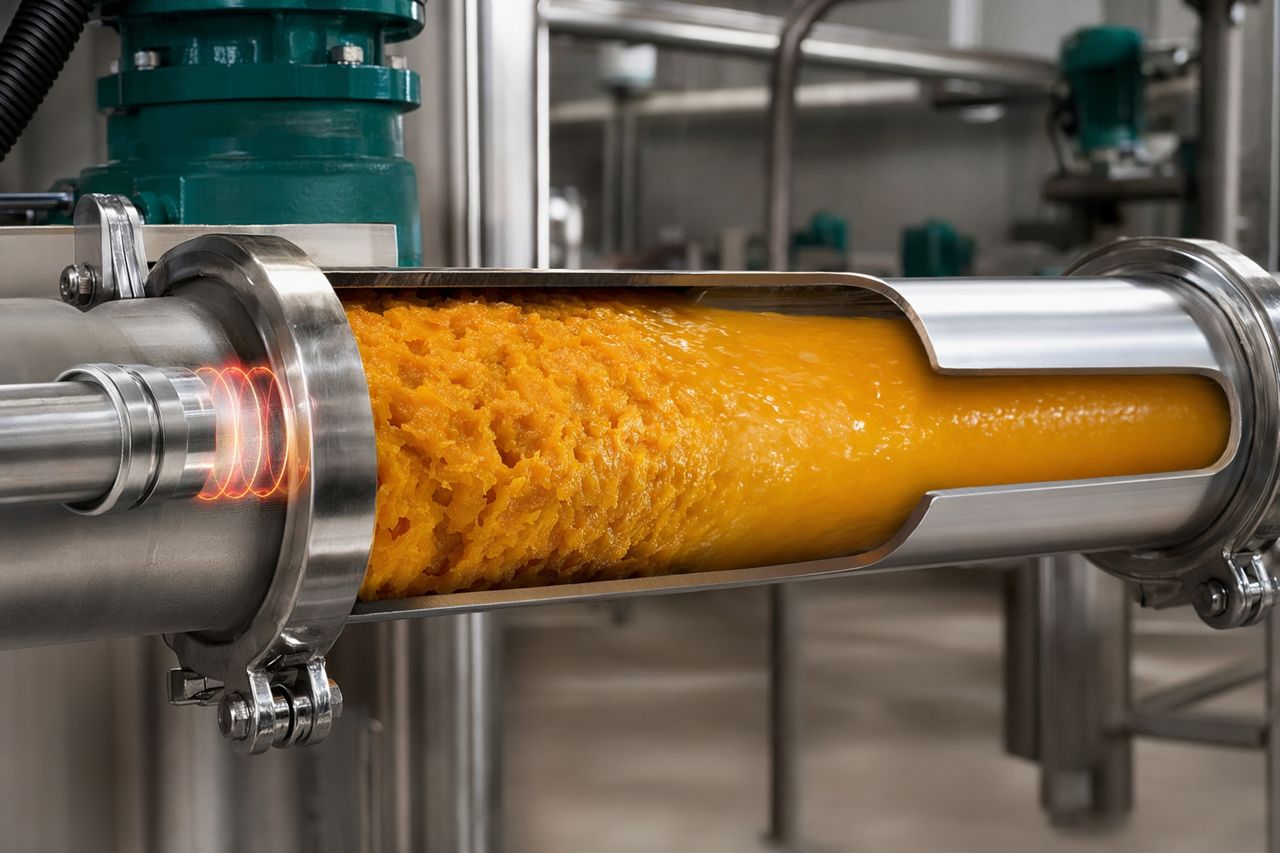
- Thick pulp raises transfer pressure and slows pumping.
- Clarification or filtration load rises as mixed maturity fruit enters the plant.
- Operators shorten decision time, which increases batch-to-batch variability.
Before season starts, map the plant by actual flow behavior rather than equipment brochure capacity. Identify the asset that loses the most time when mango mash thickens: pulper discharge, heat exchanger, holding tank outlet, decanter feed, press, clarifier, filter, or clean-in-place turnover.
Use pulp holding as a controlled process step
Pulp holding is often treated as temporary storage. In mango season, it is a production control zone.
When pulp sits unmanaged, the plant can see:
- uneven viscosity between tanks,
- slow tank discharge,
- inconsistent press feed,
- sediment and suspended solids variation,
- rework pressure near the end of a shift,
- longer cleaning due to sticky residues.
A controlled holding strategy should define the intended role of each tank: surge buffer, enzyme contact stage, blending equalization point, or separation feed tank. If the same tank is expected to do all four jobs, operators lose control when fruit intake peaks.
Practical holding questions for plant managers
Ask these before the first peak week:
- Which tanks receive the widest variation in mango maturity?
- Which tanks are most likely to overhold during truck surges?
- Can operators mix tanks without creating excessive air entrainment or solids damage?
- Where is enzyme dosing easiest to verify and repeat?
- Which downstream machine benefits most from a more pumpable mash?
The answer often points to a better enzyme addition point and a more stable holding sequence.
Plan enzyme-assisted viscosity management around bottlenecks
For mango processing, the value of enzymes is not theoretical. The operational goal is to make pulp behave more predictably under real plant conditions.
A well-selected enzyme program may support:
- lower mash viscosity before pressing or decanting,
- improved juice release from fibrous pulp,
- faster movement through piping and heat exchange,
- more consistent clarification performance,
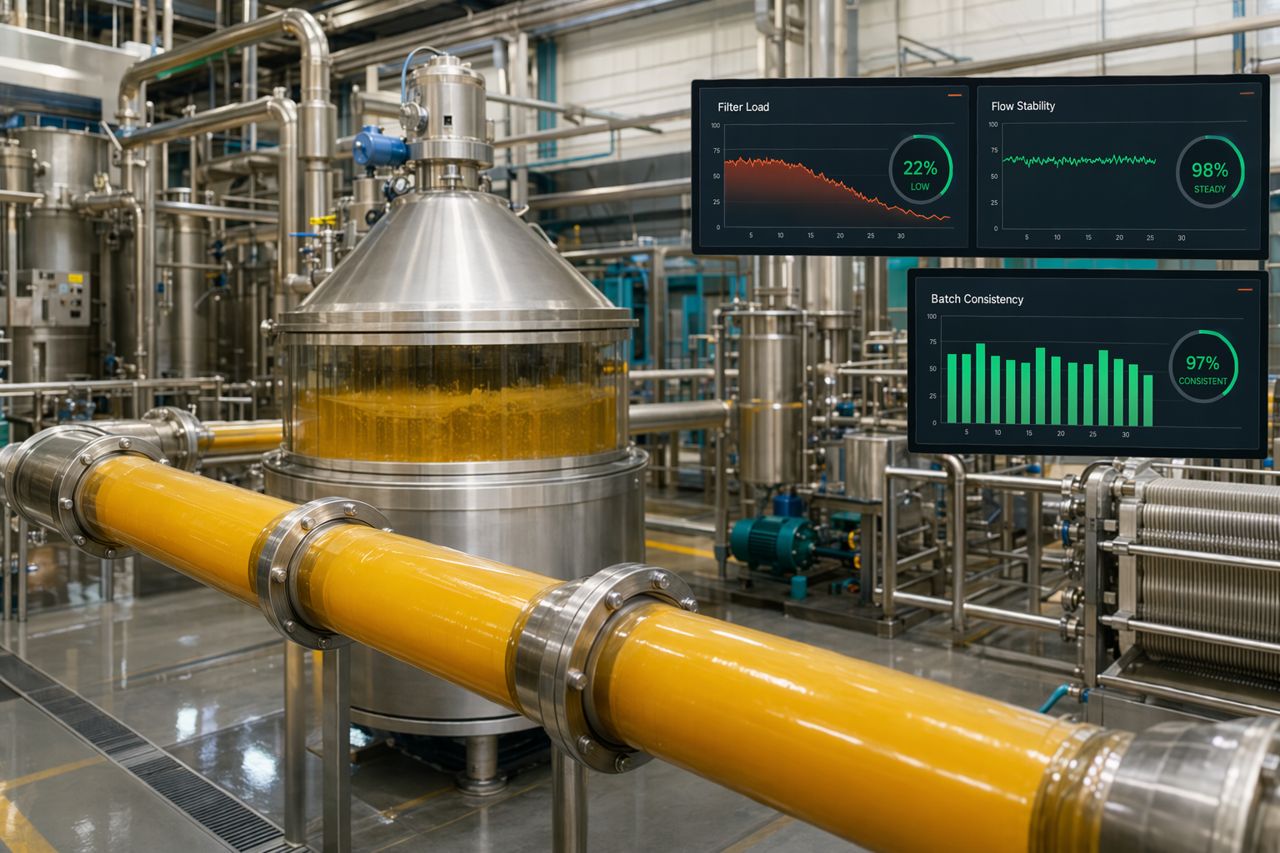
- reduced filter loading from unstable suspended solids,
- smoother scheduling of operators and cleaning crews.
The right plan depends on mango variety, ripeness profile, fiber load, heating sequence, retention time, and how the plant separates juice from mash. Enzymeforjuice typically frames trials around the plant’s existing line: where pulp slows, where tanks back up, and where the production team needs more predictable discharge.
Do not let the press set the whole season schedule
If the press or decanter becomes the limiting asset, the rest of the plant starts serving that constraint. Labor waits, pulp holds too long, and upstream teams keep producing material the separation area cannot clear.
Enzyme-assisted viscosity reduction can help widen the operating window, but it should be tied to scheduling decisions:
- staggered fruit reception where possible,
- defined pulp tank rotation,
- pre-shift enzyme preparation checks,
- separation feed targets by batch family,
- clear hold-and-release rules,
- protected cleaning windows.
This is where plant managers gain practical leverage. The enzyme program is not a shortcut around discipline; it is a tool that works best when dosing, contact time, mixing, and release decisions are repeatable.
Labor scheduling: assign people to the constraint
During mango peak, extra labor is often placed at intake and packing. That may be necessary, but the hidden labor drain is usually around blocked flow: operators watching slow tank discharge, crews changing filters too frequently, or maintenance teams responding to pump strain and sticky build-up.
Build the schedule around the bottleneck map:
- Put experienced operators at enzyme dosing and tank release points.
- Keep separation feed decisions with staff who understand pulp behavior.
- Assign cleaning crews when residue risk is highest, not only at shift end.
- Use simple batch records to connect fruit lot, enzyme addition, hold time, and separation performance.
- Hold short daily reviews during peak weeks to adjust the plan quickly.
Small changes in staffing position can prevent large losses in throughput.
Clarification and filtration load: watch the lagging indicators
A mango batch may look acceptable at the pulper and still punish the clarification area. Suspended solids, pectin structure, and fiber behavior can shift across lots. If the plant only reacts when filters slow, the correction comes late.
Use operational indicators that teams already trust:
- tank drawdown speed,
- pump behavior,
- press cake consistency,
- turbidity trend,
- filter change frequency,
- clarifier residence pressure,
- rework volume,
- cleaning duration.
An enzyme program should be judged against these plant-level outcomes. The best result is not simply a thinner mash in a beaker; it is a production line that keeps moving with fewer surprises.
Where Enzymeforjuice fits before peak season
Enzymeforjuice supports tropical fruit juice plants with enzyme solutions selected for real processing constraints: pulp breakdown, viscosity management, press yield, clarification support, and batch consistency. For mango season planning, the most useful work happens before trucks queue at the gate.
A practical pre-season review can include:
- fruit profile and maturity range,
- current line bottleneck map,
- likely enzyme addition points,
- mixing and holding limitations,
- separation and filtration objectives,
- trial design for plant validation,
- production team handling notes.
The outcome should be a plant-ready enzyme plan that operators can run under pressure.
60-second explainer video
[Embedded faceless explainer video module: mango pulp moves from intake surge to controlled enzyme dosing, viscosity reduction, cleaner separation, and steadier filtration. Includes voiceover, on-screen subtitles, and industrial still-frame animation.]
Peak-season planning checklist
Before mango intake rises, confirm the following:
- The bottleneck map is current and based on observed production behavior.
- Pulp holding tanks have defined roles and release rules.
- Enzyme dosing points are accessible, repeatable, and documented.
- Operators know what good mixing and contact look like on the line.
- Separation teams have clear feed priorities.
- Cleaning windows are protected, not sacrificed every day.
- Batch records connect fruit condition, enzyme use, and downstream results.
- A trial protocol is ready for any recipe or process adjustment.
Request a quote for mango-season enzyme planning
If mango pulp viscosity, press load, clarification speed, or filtration pressure is limiting your season throughput, Enzymeforjuice can help specify a plant-trial enzyme approach for your line.
Request a quote through the on-site form and include your fruit type, process flow, current bottleneck, and target improvement area.