Ripeness variation starts affecting throughput before the fruit reaches the mill
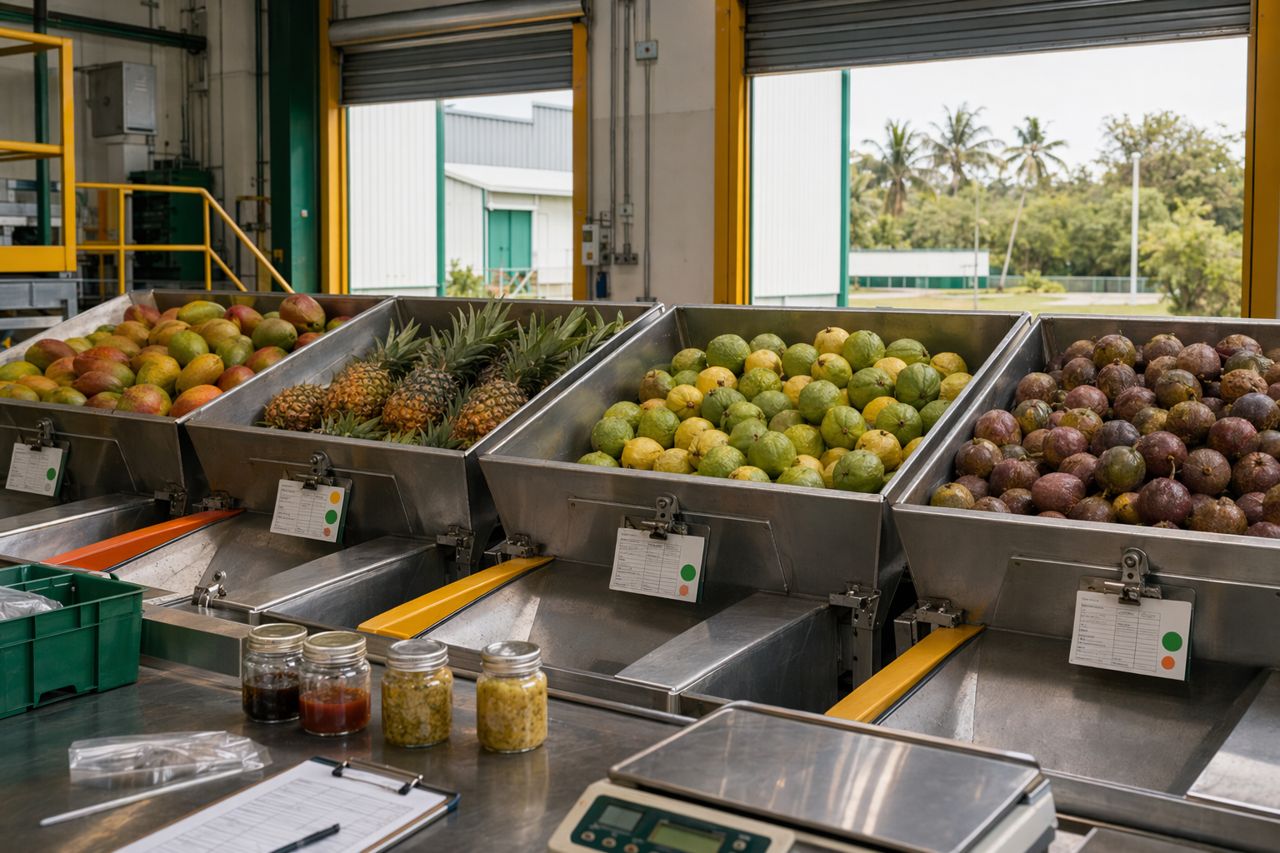
Peak-season receiving is not a single raw material stream. It is a moving blend of green-leaning, mature, overripe, bruised, heat-stressed, and storage-affected fruit. For a tropical fruit juice plant, that variation shows up quickly: mash viscosity changes, press performance moves, clarification slows, filtration load rises, and batch-to-batch targets become harder to hold.
A practical enzyme program begins at receiving because the receiving dock is where the process first learns what kind of fruit it is dealing with. Enzymeforjuice works with processors that need an enzyme supplier for fruit juice processing who understands that ripeness is not a quality note only; it is a production variable.
This article outlines how ripeness variation influences pectin behavior, starch conversion, pulp release, juice yield, and QC sampling during peak season. It is written for juice manufacturers and the enzyme distributors who supply them; Enzymeforjuice supplies the enzymes discussed here wholesale, by quote.
Why ripeness changes the behavior of fruit mash
Tropical fruit does not ripen in a perfectly uniform pattern. Even within one delivery, fruit can carry different levels of structural firmness, soluble solids, pectin condition, starch carryover, and pulp breakdown potential.
For plant managers, the result is not theoretical. It changes how the line runs.
Green-leaning fruit
Less mature fruit often brings firmer tissue and higher resistance to mash breakdown. Depending on the fruit type, it may also carry more starch or less favorable pulp release behavior. In production, this can mean:
- Higher mash viscosity after crushing or pulping
- Slower juice release at the press or decanter
- Greater load on strainers and filters
- Increased risk of haze or settling instability
- Longer holding time before clarification targets are reached
Fully mature fruit
Well-matured fruit normally gives the plant its most predictable operating window. Cell structure is easier to disrupt, juice release is more responsive, and clarification planning is more stable. But even mature fruit varies by farm, harvest interval, transit condition, and temperature exposure.
Overripe or heat-stressed fruit
Overripe fruit can look easy to process because the tissue is soft. In practice, it may create its own complications. Pectin behavior can increase viscosity, pulp fines can overload clarification, and microbial pressure may shorten the time available for controlled processing. The line may appear to move product quickly at the front end while losing time later in separation, clarification, or filtration.
Pectin behavior: the viscosity lever many lines feel first
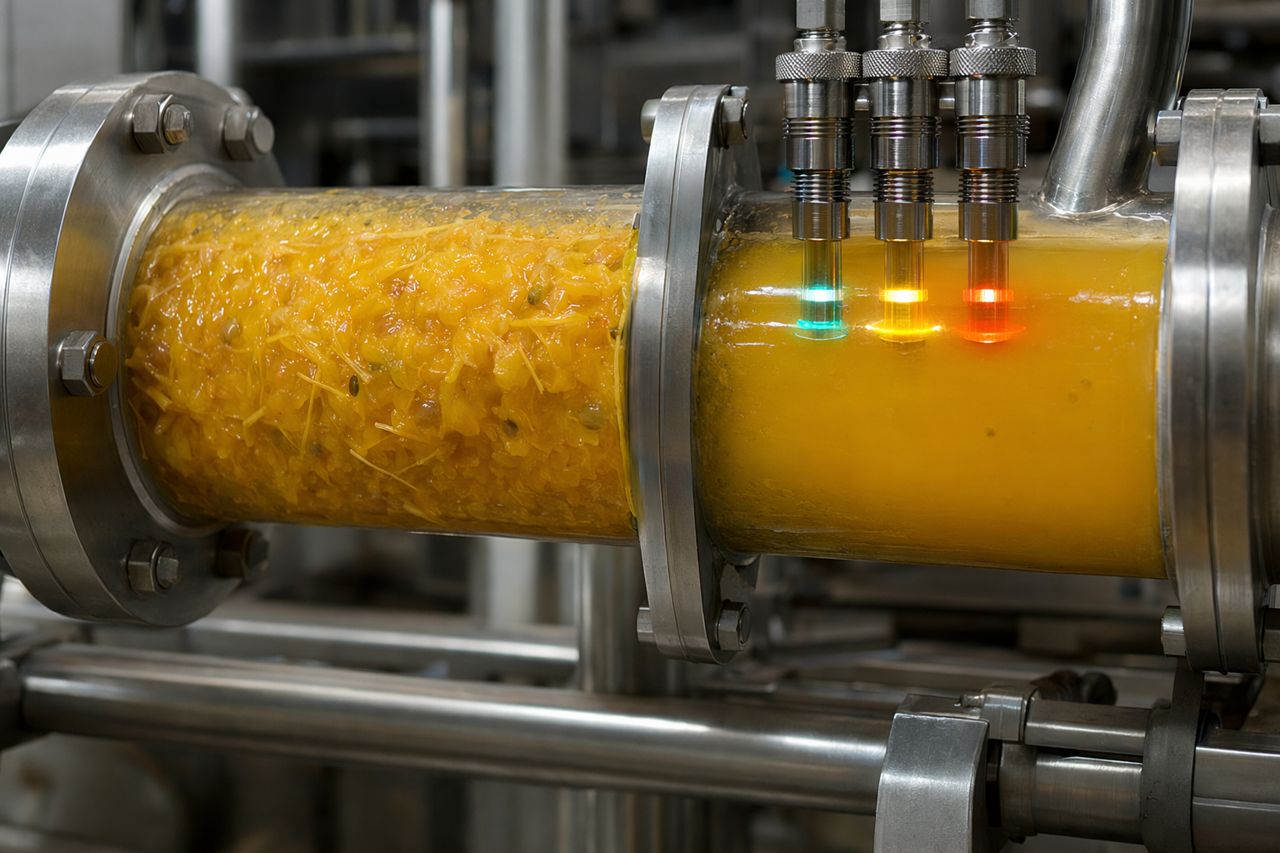
Pectin is one of the main reasons tropical fruit mash can shift from pumpable to resistant. As fruit ripens, pectin structure changes. That change affects how pulp holds water, how suspended solids behave, and how easily juice separates from the mash.
When pectin remains highly water-binding, the plant can see:
- Thick mash that slows transfer and mixing
- Reduced press drainage
- Longer clarification waits
- More suspended cloud than planned
- Higher filter differential pressure and shorter filter runs
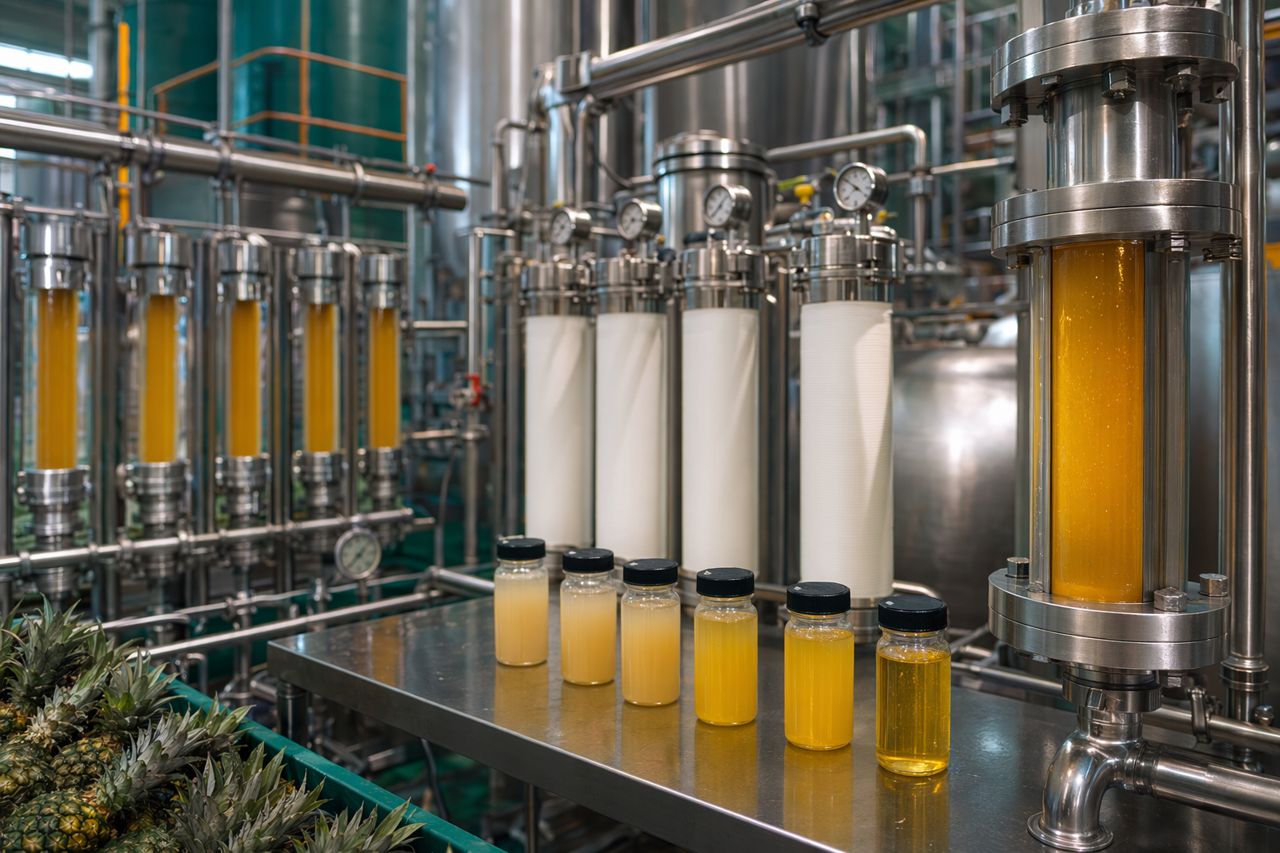
Pectinase support is often used to reduce viscosity and improve depectinization. The practical target is not simply a clearer juice; it is a more controllable process: better flow, easier separation, and less time lost waiting for a stubborn batch to become workable.
For tropical fruit plants running mango, guava, pineapple blends, passion fruit, papaya, banana-containing bases, or mixed tropical formulations, pectin behavior should be tracked as part of the receiving-to-processing link.
Starch carryover: small variation, large clarification impact
Some tropical fruits can carry starch into processing depending on harvest maturity and fruit physiology. Green-leaning fruit is the common concern. Starch that survives into juice can contribute to haze, sediment risk, and added filtration load.
Amylase support may be used when starch status threatens downstream clarity or filterability. The key is to avoid treating all incoming fruit as identical. If one receiving period carries more starch risk than another, the enzyme program should be able to adjust within a defined plant trial framework.
The production question is direct: is starch carryover causing avoidable clarification time, repeat handling, or rejected batch appearance? If yes, ripeness-linked enzyme selection becomes a useful control point.
Cell wall breakdown and pulp release
Pulp yield is not controlled by pectin alone. Cellulose, hemicellulose, and other cell wall components influence how much juice releases from the fruit matrix and how the mash behaves during maceration, pressing, or decanting.
Cellulase and hemicellulase support can help improve pulp breakdown and release more entrained juice, particularly when the fruit stream includes firm or fibrous material. The best result is not maximum breakdown at any cost. The best result is a production-balanced outcome:
- Lower mash resistance
- Better press or decanter performance
- Improved extract recovery
- Manageable suspended solids
- Consistent clarification behavior
That balance matters. Over-processing pulp can create more fines than the clarification system wants. Under-processing leaves recoverable juice locked in the mash. The correct enzyme approach is therefore tied to the plant’s equipment, hold times, temperature window, fruit mix, and finished juice specification.
QC sampling during peak season: make receiving data useful
During peak season, the mistake is to gather QC data that does not change decisions. Receiving checks should help the plant predict processing behavior before the batch becomes a bottleneck.
Useful receiving-linked QC categories include:
- Ripeness band by delivery, supplier, or orchard block
- Fruit temperature and visible condition
- Brix and acidity trend
- Pulp firmness or breakdown tendency
- Pectin status as it relates to viscosity and clarification
- Starch status where relevant to the fruit type
- Early mash viscosity observation
- Initial turbidity and settling behavior
- Press, decanter, or filtration response by batch
The point is not to create paperwork. The point is to connect raw fruit variation to processing choices. When QC, production, and enzyme dosing decisions use the same receiving profile, the plant can respond faster and reduce the number of batches that need correction downstream.
A practical ripeness-management workflow
A plant does not need to redesign its line to improve ripeness control. It needs a clear intake profile and a repeatable decision structure.
1. Segment the fruit stream
Separate incoming fruit into practical ripeness bands where possible. Even basic segmentation can reduce process noise. If full physical separation is not realistic, record the band mix so production understands the expected behavior.
2. Link ripeness bands to mash behavior
Track how each band affects viscosity, pumpability, press yield, clarification time, and filtration load. This builds a plant-specific map rather than relying on generic assumptions.
3. Define enzyme response options
Create controlled response paths for pectinase, amylase, cellulase, or hemicellulase support depending on the fruit condition and process target. The enzyme plan should be narrow enough for operators to follow and flexible enough to handle peak-season variability.
4. Run validation trials under plant conditions
Bench observations can guide selection, but plant trials confirm whether the program improves throughput, yield, clarification speed, and consistency on the actual line. Validation should use plant-relevant endpoints: flow behavior, separation performance, turbidity movement, retention time, filter run length, and recovered juice.
5. Standardize before the season peaks
The best time to set the decision tree is before the dock is overloaded. Once receiving pressure rises, the plant needs defined choices, not debate.
What to expect from an enzyme supplier that understands juice operations
For tropical fruit processors, enzyme supply is not just product availability. It is production fit. Enzymeforjuice supports plant teams with enzyme selection tied to raw material variation, equipment constraints, and measurable operating goals.
A useful supplier should help answer:
- Which fruit conditions are increasing mash viscosity?
- Where is yield being lost: extraction, separation, or filtration?
- Is pectin, starch, or fiber structure the main limiting factor?
- How should enzyme response change between green-leaning and overripe loads?
- What QC endpoints will confirm improvement without slowing the line?
- How can the program reduce downtime, rework, and batch drift?
Bottom line: ripeness control is capacity control
Ripeness variation will not disappear during peak season. The question is whether the plant treats it as a receiving note or as a process input.
When ripeness data is linked to enzyme selection and QC endpoints, the plant gains a more stable path to lower viscosity, stronger juice release, faster clarification, reduced filtration load, and tighter batch consistency.
Enzymeforjuice supplies enzyme programs in bulk to juice manufacturers, co-packers, distributors and resellers. If variable ripeness is costing throughput or yield on your line, or your customers are asking for a seasonal enzyme program, send us the product or process need, the quantity you expect to buy, and the destination country. Pack format and documentation are quoted per order.