Aseptic Puree Export Quality Checklist for Tropical Fruit Plants
Export buyers do not only buy mango, guava, passion fruit, pineapple, or mixed tropical puree. They buy repeatability. Each drum has to move through pumping, heat treatment, aseptic filling, shipping, rework checks, and final formulation without creating surprises.
For a tropical fruit juice plant, export quality is usually won or lost before the drum is sealed. Mash viscosity, Brix control, insoluble solids, heat-transfer behavior, filtration load, and documentation discipline all shape whether a shipment clears buyer inspection smoothly.
Enzymeforjuice supplies juice-processing enzymes wholesale, by quote, to puree and concentrate exporters, co-packers and the distributors who serve them. The enzyme programs below help reduce mash resistance, improve press and decanter performance, support clarification and tighten batch-to-batch consistency; final settings should always be validated against your fruit variety, maturity profile, line layout and buyer specification.
1. Start with the buyer specification, not the fruit bin
Before processing, confirm the commercial specification the export buyer will use to accept or challenge the shipment.
Check the specification for:
- Target Brix range and allowed correction approach
- Pulp level, insoluble solids, and texture expectation
- Viscosity window at the agreed test condition
- Color and flavor limits after heat treatment
- Foreign matter limits
- Microbiological requirements
- Packaging format, drum liner type, and aseptic closure requirement
- Shelf-life expectation and storage condition
- Required documents and certificates
A common export failure is producing a puree that is safe and usable, but not aligned with the buyer's downstream pumping, blending, or filling process. Viscosity and pulp behavior matter commercially because they affect how the buyer empties drums, blends concentrate, and controls final product texture.
2. Control fruit maturity before it controls the batch
Tropical fruit maturity can swing quickly. Overripe fruit may increase pectin breakdown, microbial pressure, and flavor variation. Underripe fruit may create higher fibrous load, lower extractability, and harder clarification.
Practical controls at intake:
- Segregate lots by variety, maturity, and supplier
- Reject fruit with fermentation, mold, excessive bruising, or soil contamination
- Track lot identity through pulping and holding
- Compare incoming Brix, pH, and visual condition against expected seasonal range
- Avoid mixing high-risk lots into export-bound production without review
Strong intake discipline reduces downstream correction work. It also gives the quality team a defensible record if a buyer raises a traceability question.
3. Set mash viscosity targets before dosing or heating
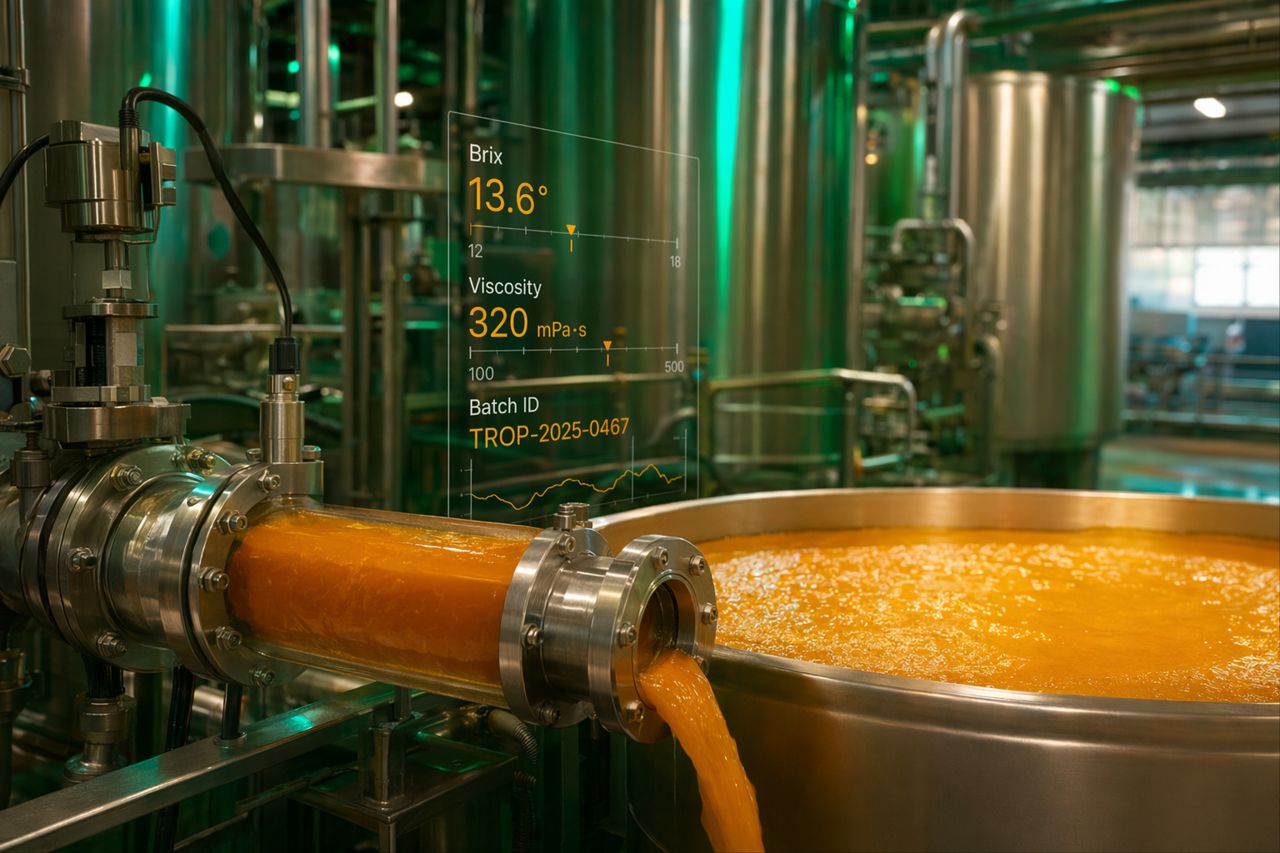
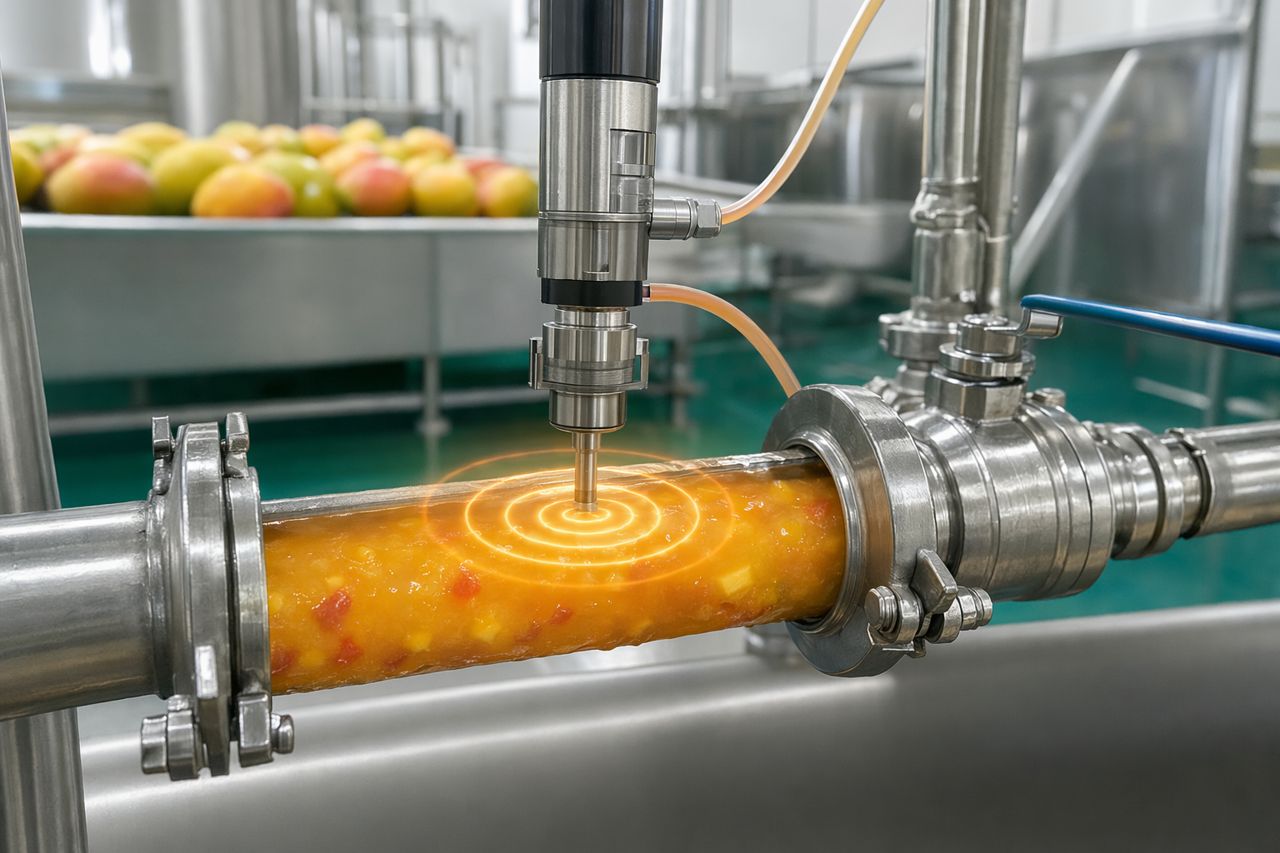
In puree plants, high mash viscosity can restrict pump flow, reduce heat-transfer efficiency, slow deaeration, overload finishers, and increase hold-up in lines. Enzyme treatment can help by modifying pectin-driven structure and releasing trapped liquid, but the program should be built around a measurable production target.
Good process questions include:
- Is the main bottleneck pulping, finishing, heating, decanting, or filling?
- Does the puree surge tank show inconsistent flow behavior between lots?
- Are pumps running harder on specific varieties or maturity profiles?
- Is the plant losing time to screen blinding or manual cleanouts?
- Does heat treatment require more margin because the puree does not move uniformly?
For export puree, viscosity control is not just about easier pumping. It supports more consistent drum filling, better thermal process control, and fewer buyer complaints about texture variation.
4. Use enzyme treatment as a controlled process step
Enzyme addition should be treated like a controlled manufacturing step, not a last-minute correction. The goal is predictable modification of the mash or juice stream so the line can run with lower resistance and more stable separation behavior.
Production-led enzyme control points:
- Dosing location with reliable mixing
- Retention time aligned with plant flow
- Temperature window compatible with the process
- Clear start and stop rules for each batch
- Defined checks for viscosity, flow behavior, and separation response
- Operator instructions that prevent overdosing, missed dosing, or late dosing
Enzymeforjuice enzyme programs are selected around the plant's fruit mix, processing route, and commercial quality targets. For puree export, the practical value is usually seen in smoother mash handling, lower filtration or finishing load, more stable clarification where required, and less downtime from line restrictions.
5. Keep Brix control disciplined and documented
Brix is one of the first numbers export buyers review. It affects pricing, formulation value, drum count, and final beverage calculations.
Brix control checklist:
- Confirm calibration status of measurement instruments
- Measure at consistent process points
- Record corrections and blending decisions
- Avoid undocumented dilution or concentration adjustments
- Separate in-process readings from final release readings
- Retain batch records with drum-level traceability where required
Brix correction should not hide process instability. If the same fruit type requires repeated correction, review intake maturity, puree yield, evaporation behavior, and process losses.
6. Manage microbiology before aseptic filling
Aseptic packaging does not rescue poor hygiene. It protects a product that has already been brought under control.
Key controls include:
- Sanitary fruit washing and sorting
- Controlled holding times before heat treatment
- Hygienic pulping and finishing equipment
- Verified cleaning cycles for tanks, valves, fillers, and transfer lines
- Heat treatment aligned with product characteristics
- Sterile air, steam, or barrier systems maintained to specification
- Environmental monitoring around the filling zone
High-viscosity puree can complicate heat transfer and create process variation. Reducing excessive mash resistance before thermal treatment can support more predictable flow and fewer cold-spot concerns, subject to plant validation.
7. Inspect aseptic drums as part of the process, not packaging afterthought
For export, the drum is part of the quality system. A good puree can be downgraded by damaged drums, poor liner handling, loose closures, or incomplete labeling.
Drum filling checklist:
- Approved drum and liner combination
- Clean, dry, undamaged outer drums
- Liner integrity checked before filling
- Aseptic connection and closure procedure followed
- Correct fill weight and headspace control
- Drum coding linked to batch and production time
- Pallet condition suitable for export handling
- Finished drums protected from heat, rain, pests, and direct contamination
Operators should be trained to stop filling when closure integrity is in doubt. Rework is usually cheaper than an export claim.
8. Build a release file that answers buyer questions quickly
Export buyers expect documentation that is complete, consistent, and fast to retrieve. A strong release file reduces back-and-forth and protects the plant when shipments are inspected months later.
Typical export release documents:
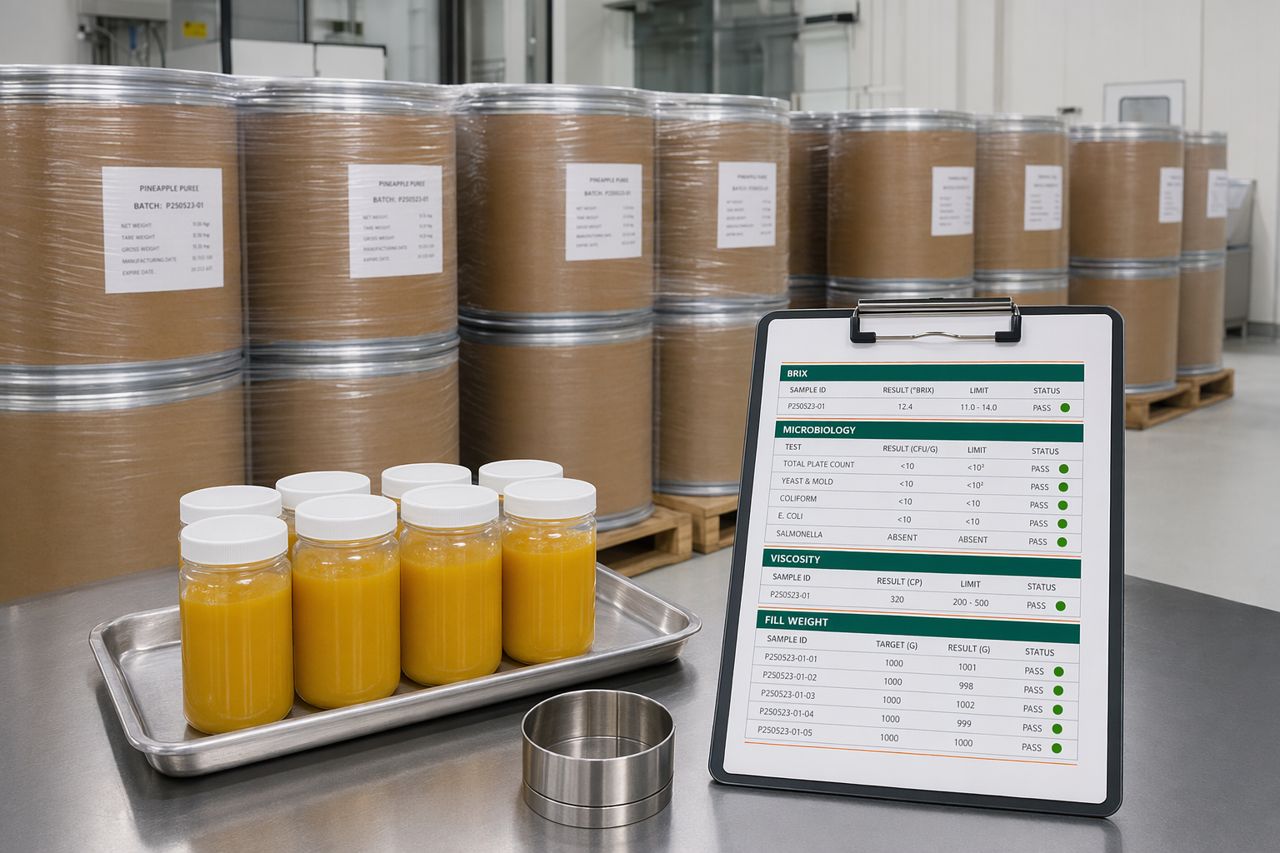
- Certificate of analysis
- Batch production record
- Drum list and traceability map
- Microbiological release results
- Brix, pH, viscosity, and color records as required
- Packaging and net weight records
- Cleaning and sanitation verification records
- Heat-treatment record
- Allergen, GMO, pesticide, heavy metal, or residue statements where required
- Shipping and storage instructions
The document set should match the buyer agreement. If a buyer expects viscosity data, define the method and condition in advance so both sides interpret the result the same way.
9. Watch the operating signs of export-risk puree
Export failures often show early warnings during production.
Investigate when you see:
- Sluggish transfer from pulper to balance tank
- Pump load variation between similar lots
- Screen or finisher blinding above normal pattern
- Holding tanks retaining heavy residue after discharge
- Slow clarification or inconsistent supernatant quality
- Unstable Brix after blending
- Foam or air entrainment during transfer
- Filler interruptions caused by product flow behavior
- Drums from the same batch showing texture variation
These are not only quality issues. They are throughput issues. They cost line time, operator attention, cleaning time, and customer confidence.
10. Where Enzymeforjuice fits in the export puree workflow
Enzymeforjuice works with tropical fruit processors that need enzyme solutions selected for real production constraints rather than generic lab performance. We focus on the process outcomes plant managers care about:
- Lower mash viscosity for steadier pumping and heating
- Improved press, decanter, or finisher throughput
- Better juice release from fibrous tropical fruit matrices
- Faster clarification where clear juice or clarified fractions are required
- Reduced filtration pressure and screen load
- More consistent batch behavior across seasonal fruit variation
- Shorter downtime linked to blockages, fouling, and manual cleanouts
A successful enzyme program should be validated in your plant with your fruit, your equipment, and your buyer specification. The target is not enzyme use for its own sake. The target is a cleaner, more predictable export process.
Export puree quality checklist summary
Use this quick list before releasing aseptic puree for export:
- Buyer specification confirmed and current
- Fruit intake segregated and traceable
- Mash viscosity and flow behavior controlled
- Enzyme treatment documented as a process step
- Brix readings checked and corrections recorded
- Microbiological controls verified before filling
- Thermal process records complete
- Aseptic drum and liner integrity confirmed
- Drum coding and batch traceability complete
- Release documents assembled before shipment
- Retained samples stored under defined conditions
- Deviations reviewed before export approval
Request a wholesale quote
Enzymeforjuice supplies enzymes in bulk to puree and juice manufacturers, exporters, distributors and resellers. Pack format, quantity and documentation are quoted per order.
Request a quote through the inquiry form and include the enzyme or process need (fruit, product, bottleneck), the quantity you expect to buy (trial lot and campaign volume), and the destination country. We reply with a recommendation and a quote.