Enzyme Troubleshooting for Tropical Fruit Juice Plants
When a tropical fruit line slows down, the issue rarely sits in one tank. Mash viscosity, fruit maturity, pulp structure, heat history, retention time, dosing point, and filtration load all interact. Enzymeforjuice helps plants map common process symptoms to the enzyme classes normally evaluated in fruit juice production, then supports practical trials built around throughput, yield, clarity, and batch repeatability.
If you are looking for an enzyme supplier for fruit juice processing that speaks in plant-floor terms, this page is built for your operators, process engineers, and procurement team, and for the distributors and resellers who supply juice plants. Enzymeforjuice sells wholesale, by quote, to businesses only.
Troubleshooting by line symptom
1. Mash is too thick before pressing or decanting
Typical plant impact
- Slow pump transfer from pulper to holding tank
- High motor load on mixers or positive displacement pumps
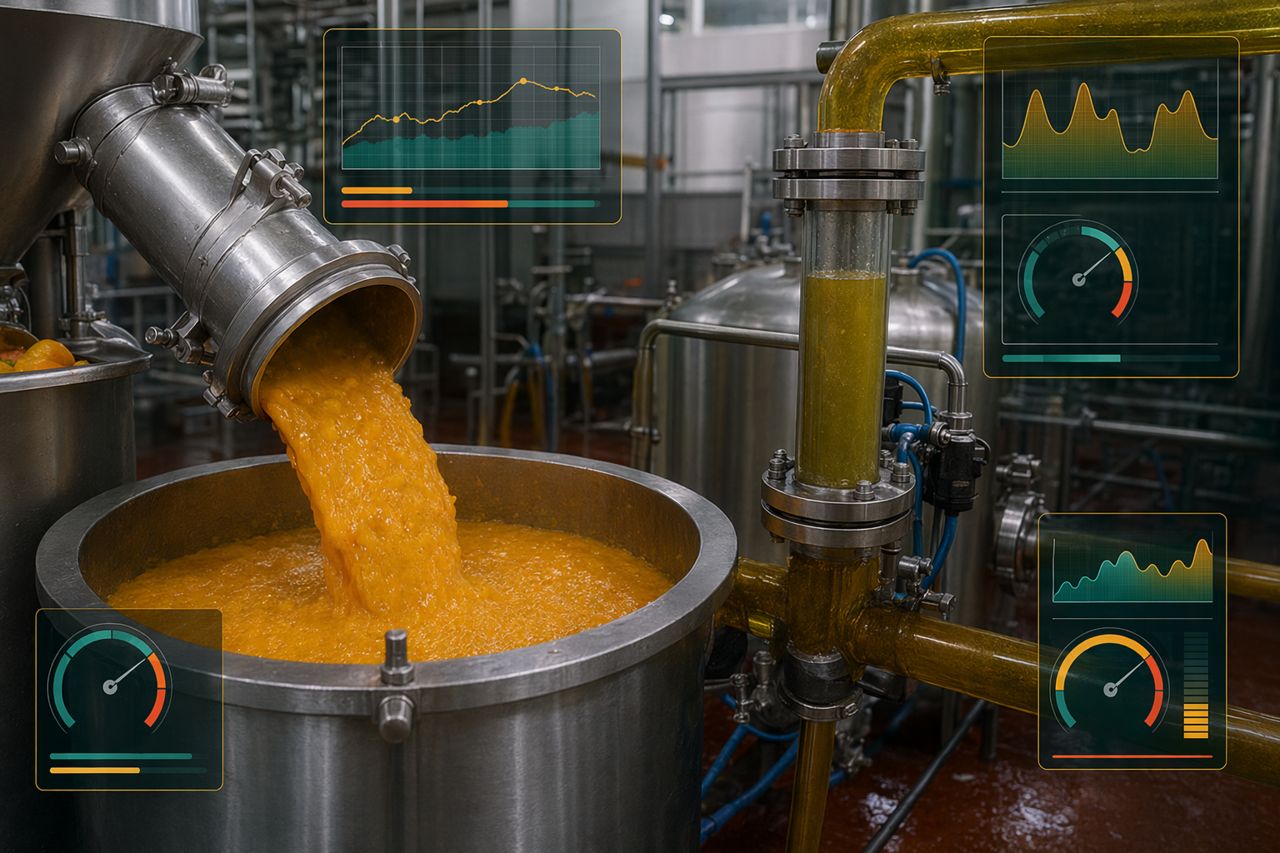
- Uneven enzyme contact in thick mango, guava, banana, papaya, or passion fruit mash
- Lower press throughput and more retained juice in pomace
- Difficult temperature and retention-time control
Likely process causes to check
- High soluble pectin load from ripe or overripe fruit
- Insoluble cell-wall fragments holding water in the mash
- Undersized mixing energy for high-pulp batches
- Enzyme added too late, or into a zone with poor dispersion
- Short retention time before press or decanter
Enzyme classes commonly evaluated
- Pectinase systems to reduce pectin-driven viscosity and improve juice release
- Cellulase and hemicellulase blends to help open plant cell-wall structure where pulp integrity limits extraction
- Maceration-support blends for dense tropical purées where pressability is the primary constraint
What to validate in trial work
Track mash flow behavior, press cycle time, free-run yield, pomace wetness, transfer stability, and downstream turbidity. Enzymeforjuice can help structure side-by-side trials against your current process conditions rather than isolated lab targets.
2. Press yield is inconsistent between fruit lots
Typical plant impact
- Yield swings from supplier to supplier or harvest week to harvest week
- Operators compensate with longer holding times or more aggressive pressing
- Higher pomace moisture and variable solids carryover
- Difficulty forecasting finished juice volume from incoming fruit weight
Likely process causes to check
- Fruit maturity variation affecting pectin, starch, and fiber profile
- Inconsistent crushing, pulping, or particle size
- Temperature drift during enzyme contact
- Variable holding time caused by upstream bottlenecks
- Uncontrolled dilution or condensate contribution
Enzyme classes commonly evaluated
- Broad-spectrum pectinase blends for variable pectin structures across fruit lots
- Cell-wall degradation support blends where fibrous pulp traps liquid
- Amylase support for fruits or formulations where residual starch contributes to body or processing drag
What to validate in trial work
Measure yield per batch, press residence time, pomace moisture trend, pulp carryover, and whether the chosen dose window tolerates normal seasonal variation.
3. Clarification is slow or incomplete
Typical plant impact
- Long tank occupancy before clarification target is reached
- Increased centrifuge load or separator recirculation
- Carryover haze into filtration
- Delays before blending, concentration, or filling
Likely process causes to check
- Soluble pectin stabilizing suspended particles
- Fine pulp particles remaining after extraction
- Incomplete enzyme contact due to short retention time or poor mixing
- Temperature outside the effective operating window for the selected enzyme system
- Excessive shear producing fines that are harder to settle or separate
Enzyme classes commonly evaluated
- Clarification pectinase systems to reduce pectin-related haze stability
- Pectin lyase and polygalacturonase-rich profiles depending on fruit type, pH, and heat exposure
- Cellulase/hemicellulase support when fine fiber is a persistent clarification burden
What to validate in trial work
Track turbidity decline over time, separator performance, tank release time, sediment compactness, and filtration differential pressure after clarification.
4. Filters blind too quickly
Typical plant impact
- Short filter runs
- Higher filter aid usage or membrane cleaning frequency
- Rising differential pressure
- Lost production time during changeovers and cleaning
- Variable final clarity even after normal clarification steps
Likely process causes to check
- Residual pectin passing into filtration
- Fine colloidal pulp from aggressive pulping or centrifuge settings
- Protein-polyphenol or fiber-associated haze depending on fruit mix
- Incomplete upstream depectinization
- Poor separation before final filtration
Enzyme classes commonly evaluated
- Pectinase clarification blends to reduce pectin-related filter load
- Hemicellulase support where fiber fines are contributing to blinding
- Protease evaluation in selected tropical juice streams where protein-related haze or deposit behavior is documented
What to validate in trial work
Compare filter run length, pressure rise curve, cleaning interval, filtrate turbidity, rework volume, and total downtime per production day.
5. Cloud is unstable in cloudy tropical juice
Not every plant wants brilliant clarity. Cloudy mango, guava, pineapple blends, passion fruit bases, and nectar intermediates require control rather than maximum breakdown.
Typical plant impact
- Cloud separation in holding or after thermal processing
- Sediment that varies by batch
- Texture drift during storage
- Over-clarification when the enzyme program is too aggressive
Likely process causes to check
- Enzyme profile not matched to the desired cloud specification
- Excessive retention time before heat treatment
- Over-processing of cell-wall structure
- Variation in purée solids and fruit maturity
- Poor tank agitation during hold
Enzyme classes commonly evaluated
- Controlled pectinase systems for targeted viscosity reduction without unnecessary cloud loss
- Limited maceration blends where extraction is needed but cloud must be retained
- Process-specific enzyme timing to stop activity through downstream heat treatment once the target is reached
What to validate in trial work
Check viscosity, cloud stability, sediment volume, mouthfeel targets if applicable to the product specification, and batch-to-batch visual consistency after thermal processing.
6. Concentrator or evaporator feed behaves unpredictably
Typical plant impact
- Feed viscosity limits evaporator throughput
- Heat transfer becomes less efficient
- Higher fouling risk
- Product concentration targets take longer to reach
- More frequent cleaning interruptions
Likely process causes to check
- Insufficient viscosity reduction before concentration
- Residual pectin or starch in the feed stream
- Pulp fines carried forward from extraction and clarification
- Heat history changing the behavior of untreated polysaccharides
Enzyme classes commonly evaluated
- Viscosity-reducing pectinase blends before concentration
- Amylase support where starch contribution is confirmed
- Cellulase/hemicellulase support for persistent fiber-related load
What to validate in trial work
Monitor feed viscosity trend, evaporator throughput, fouling interval, concentration time, and cleaning frequency across comparable batches.
7. The same enzyme program does not work across all tropical fruits
A mango line is not a pineapple line. Guava is not passion fruit. Papaya and banana introduce different pulp structures, maturity effects, and viscosity behavior. Enzymeforjuice helps plants avoid a one-size-fits-all enzyme decision when the processing reality is fruit-specific.
Fruit-specific considerations
- Mango: high pulp load, strong viscosity challenge, frequent need for controlled maceration and depectinization.
- Guava: fibrous pulp and seed-associated processing issues can increase separation and filtration demand.
- Pineapple: clarification targets, pulp fines, and haze behavior often determine the enzyme selection.
- Passion fruit: seed removal, acidity, and aromatic process constraints require careful retention-time control.
- Banana and papaya: dense mash and starch or texture-related issues may require broader evaluation.
How Enzymeforjuice approaches enzyme selection
We start with the plant problem, not a generic catalog item.
Step 1: Define the bottleneck
We identify whether the main constraint is mash transfer, press loading, extraction yield, clarification time, filter life, evaporator throughput, or finished batch consistency.
Step 2: Review the process window
We look at fruit type, pH range, temperature profile, mixing, dosing point, retention time, heat treatment, separation equipment, and filtration design.
Step 3: Match candidate enzyme classes
Candidate pectinase, cellulase, hemicellulase, amylase, protease, or blended systems are selected based on the observed process symptom and product target.
Step 4: Trial against operational metrics
Trials should compare plant-relevant outcomes: yield, flow stability, turbidity, filter pressure, tank release time, cleaning frequency, and batch repeatability.
Step 5: Document the working range
Once a program performs, we help define the practical operating range so production teams can run it consistently despite seasonal variation.
When pectinase alone does not fix yield or haze
Some yield and haze problems have a cause that pectinase does not address: beta-glucan in the fruit raises viscosity, which lowers juice yield, slows filtration and clarification, and can leave cold haze in the finished product.
The practical fix is to ask for a blend containing beta-glucanase. The aim is higher juice yield, faster filtration and clarification, better aroma release and less cold turbidity. If pectinase alone has stopped improving yield or filter runs, that blend is the next trial to request.
Haze and sediment that come back in storage
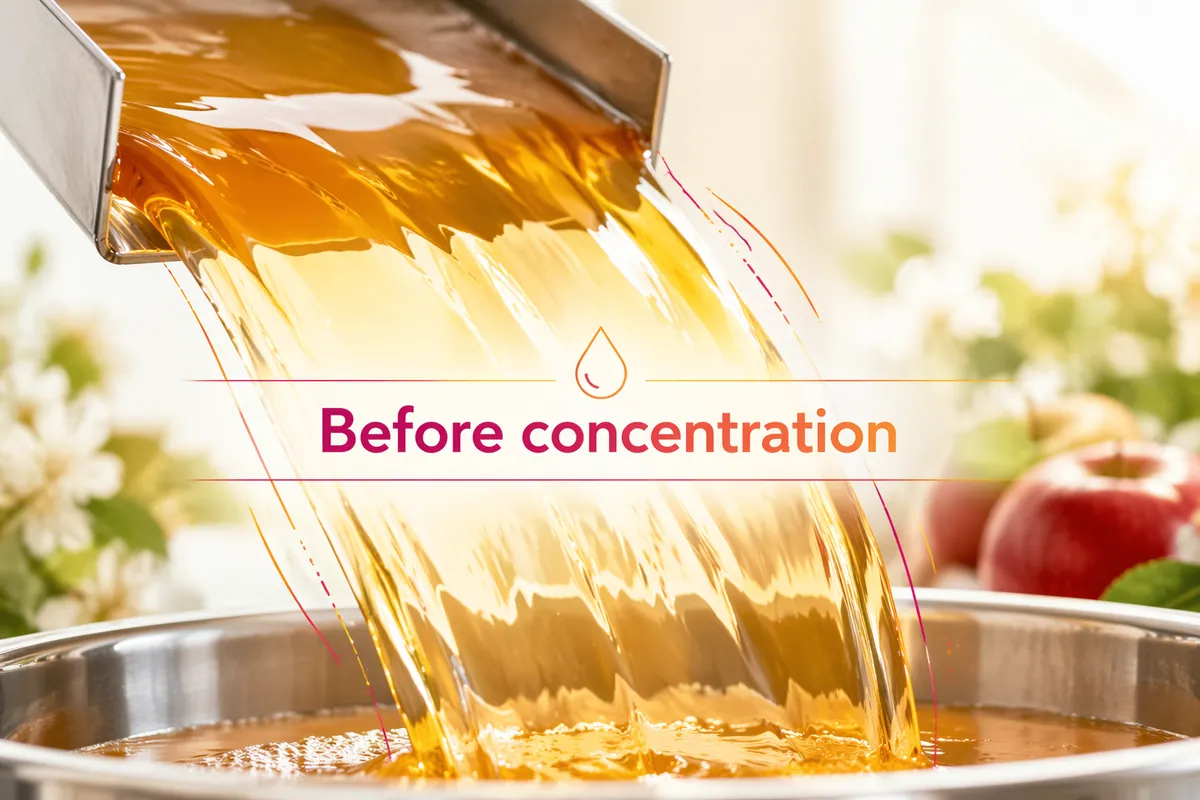
A second problem shows up after the juice has left the line: secondary sediment and turbidity forming while clarified concentrate is stored. The fix is a clarification enzyme matched to the fruit you process, chosen both to raise juice yield and to keep stored concentrate from throwing a new haze.
Send us your fruit, product style and storage time for a matched quote.
Quick troubleshooting matrix
| Line problem | Plant signal | Enzyme classes normally evaluated |
|---|---|---|
| Thick mash | Slow transfer, high pump load, poor mixing | Pectinase, cellulase, hemicellulase |
| Low press yield | Wet pomace, long press cycle, variable extraction | Pectinase, maceration blends, cell-wall support |
| Slow clarification | Long tank hold, separator overload, haze carryover | Clarification pectinase, cellulase/hemicellulase support |
| Filter blinding | Fast pressure rise, short runs, frequent cleaning | Pectinase, hemicellulase, selected protease evaluation |
| Cloud instability | Sediment, separation, batch visual drift | Controlled pectinase, limited maceration blends |
| Evaporator drag | High feed viscosity, fouling, slow concentration | Pectinase, amylase where relevant, fiber support blends |
| Seasonal inconsistency | Same recipe, different result | Broader pectinase profile, process-window adjustment |
What we need to quote accurately
To recommend the right enzyme direction for a tropical juice plant, send as much of the following as available:
- Fruit or blend type
- Current bottleneck and where it appears on the line
- Desired product style: clarified juice, cloudy juice, purée, nectar base, or concentrate feed
- Approximate process temperatures and retention times
- Dosing point and mixing conditions
- Press, decanter, centrifuge, filter, or evaporator equipment involved
- Current pain point: yield, viscosity, turbidity, filter life, downtime, or consistency
- Trial quantity, expected monthly or campaign volume, and production schedule
- Destination country for delivery
Request a quote
If your line is losing time to viscosity, wet pomace, slow clarification, filter blinding, or inconsistent tropical fruit batches, Enzymeforjuice can help identify enzyme candidates for a controlled plant trial.
Request a wholesale quote through the inquiry form and include your fruit type, process bottleneck, trial objective, the quantity you expect to buy and the destination country. Enzymeforjuice supplies manufacturers, distributors and resellers in bulk; pack format and documentation are quoted per order.